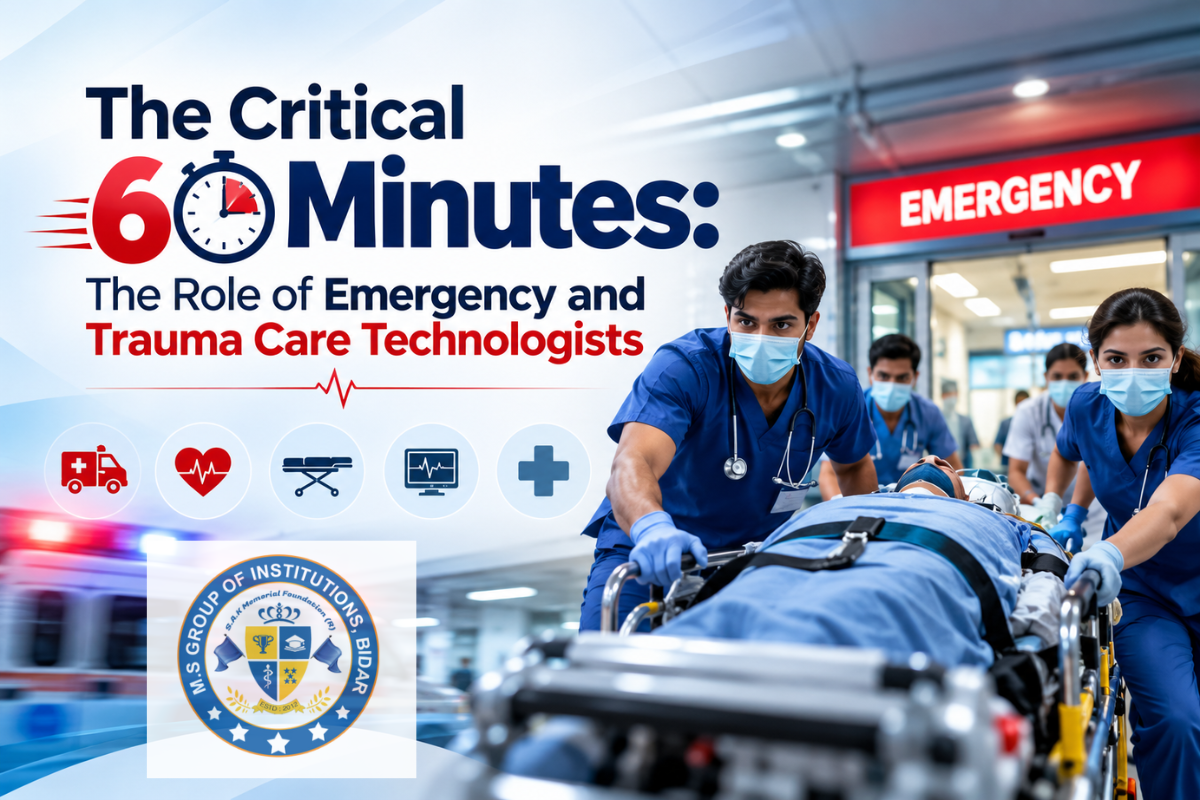
When a severe accident occurs or a sudden medical crisis strikes, time is the ultimate enemy. In the medical world, the first sixty minutes following a severe injury are known as the golden hour. It is a highly critical window where rapid, precise medical intervention significantly increases a patient’s chances of survival and recovery. But who are the individuals managing this intense, high stakes environment before the surgeons arrive?
Enter the Emergency and Trauma Care Technologists. These specialized allied health professionals are the unsung heroes of the healthcare system. They form the vital bridge between a patient’s critical moment of injury and life saving hospital care. Let us explore the demanding yet profoundly rewarding scope of emergency and trauma care technology.
Understanding the Golden Hour
The concept of the golden hour forms the foundation of all emergency medical training. If a patient receives the right care within this first hour, the likelihood of survival improves dramatically. During this sixty minute window, every second is dedicated to stabilizing vital signs, managing airways, and controlling severe bleeding.
Emergency and trauma care technologists are specifically trained to operate under extreme pressure during this period. Whether they are working inside a speeding ambulance or waiting in the brightly lit resuscitation bay of a corporate hospital, their primary goal is rapid stabilization. They do not diagnose long term illnesses; they assess immediate life threats, apply rapid interventions, and prepare the patient for advanced surgical or intensive care.
The Scope of Emergency and Trauma Care Technology
The scope of this profession extends far beyond basic first aid. Modern emergency departments are highly sophisticated environments filled with advanced life support equipment. A trained technologist is expected to master a complex set of clinical and operational skills.
- Advanced Triage: In a mass casualty situation or a busy emergency room, technologists must perform rapid triage. This involves quickly sorting patients based on the severity of their condition, ensuring that those with life threatening injuries receive immediate attention, rather than just treating the person who arrived first.
- Airway and Ventilatory Management: Securing a compromised airway is often the first step in trauma care. Technologists are skilled in operating advanced airway adjuncts and managing oxygen therapy and portable ventilators to keep the patient breathing.
- Hemodynamic Stabilization: Controlling severe hemorrhage, splinting complex fractures, and immobilizing the spine are critical daily tasks. Technologists ensure that accidental injuries or penetrating traumas do not result in irreversible organ damage during transit.
- Real Time Monitoring: Technologists continuously monitor heart rates, oxygen saturation, and other vital telemetry data. They must rapidly recognize the early signs of a stroke, a cardiac emergency, or diabetic shock and act immediately.
Expanding Career Opportunities
The demand for professionals trained in emergency and trauma care technology is growing at an unprecedented rate. As global health infrastructure expands and the focus on rapid emergency response sharpens, the career pathways for these technologists have multiplied.
- Hospital Emergency Departments: Corporate hospitals and specialized trauma centers are the primary employers. Technologists manage the resuscitation bays, assisting emergency physicians and trauma surgeons.
- Advanced Ambulance Networks: The modern ambulance is effectively a mobile intensive care unit. Technologists lead these mobile units, ensuring safe patient transfer and continuous stabilization during transport.
- Industrial and Corporate Medical Rooms: Large manufacturing plants, offshore oil rigs, and corporate hubs require on site emergency specialists to handle workplace accidents and acute health crises immediately.
- Disaster Management Teams: National and international relief organizations heavily recruit trauma care experts to manage medical operations during natural disasters or mass casualty events.
Building the Right Foundation
Working in emergency care is not for the faint of heart. It requires immense mental resilience, quick critical thinking, and a rock solid foundation in clinical skills. Theoretical knowledge alone cannot prepare you for the reality of an emergency room. You need rigorous, hands on training in simulated high stress environments.
To succeed in this adrenaline driven field, choosing an institution that prioritizes industry focused practical training is essential. For instance, students exploring allied health careers often look toward established educational centers like msgroupofinstitutions.com to build the practical agility and clinical confidence required in modern corporate hospitals. A strong academic foundation ensures that you are familiar with advanced life support protocols and modern diagnostic machinery before you ever step foot in a real trauma center.
A Career of Absolute Impact
A career in emergency and trauma care technology is fundamentally different from a standard desk job. It is a profession defined by action, technical precision, and deep compassion. When you step into a shift, you know that your knowledge and speed will directly influence whether a patient makes it through the golden hour.
For science students looking for a fast paced, high impact career in the medical sector, this field offers unparalleled professional satisfaction. You become the critical first responder, the calming presence in a moment of chaos, and a vital force in the modern healthcare ecosystem.
To explore more high growth medical fields and career insights, you can read our collection of trending healthcare blogs.